16/07/2026

Simpler Recycling is the new workplace recycling regime for England, requiring businesses to separate dry recyclable materials, food waste and non-recyclable waste before collection. The aim is to make recycling more consistent, increase the amount that gets recycled and reduce the recyclable material lost in general waste.
If you run a business in England, that means the way your workplace handles waste is changing. We explain below what this means for your premises, so you know what applies to you and when. If you have any questions or would like to discuss our recycling services, don’t hesitate to call Hurn Recycling today on 01202 257530.


The Environment Act 2021 gave the government powers to require more consistent recycling collections across England. These powers were used by The Department for Environment, Food and Rural Affairs (DEFRA) to set out a clear list of materials that workplaces must separate, and together, the DEFRA Simpler Recycling legislation and the Environment Act 2021 form the legal basis for the changes you're now seeing.
It’s worth noting that these new rules apply only to businesses in England. If your business is located elsewhere in the UK, your situation should remain unchanged.
The short answer is yes, Simpler Recycling applies to your business as it does to all businesses and non-household premises in England, from offices and shops to cafés, schools and care settings. Many of these workplaces produce what's often called household-like waste, meaning everyday items such as paper, packaging and food leftovers. Because the waste looks like what you'd find at home, the same basic separation principles apply.
And while these workplace recycling regulations don’t depend on your sector, they do depend on the size of your business. Depending on how many people you employ, you might be currently exempt, or you may need to be fully compliant.


The rules came into force on the 31st of March 2025 for workplaces with 10 or more full-time equivalent (FTE) employees. If that describes your business, you should already have suitable arrangements for dry recycling, food waste and general waste.
Smaller businesses, or micro-firms, have a little longer, so don’t worry if you aren’t yet compliant. This is covered in the following section.
A micro-firm is a business with fewer than 10 FTE employees, and that count applies across the whole business, not separately at each site; part-time employees are counted on a pro-rata basis. For example, two people who each work half the week count as one FTE. While micro-firm recycling exemptions are currently in place, they are only temporary and are set to end on the 31st of March 2027.
From that point onwards, micro-firms must follow Simpler Recycling in the same way as everyone else, so this is a good time to plan, starting with learning what you need to separate.

The core idea behind Simpler Recycling is waste stream segregation, which simply means keeping different types of waste apart from the moment they're thrown away. The rules set out standardised recycling waste streams, so every workplace in England sorts its waste in broadly the same way.
The waste streams are as follows, and each must be separated into its own bin or container:
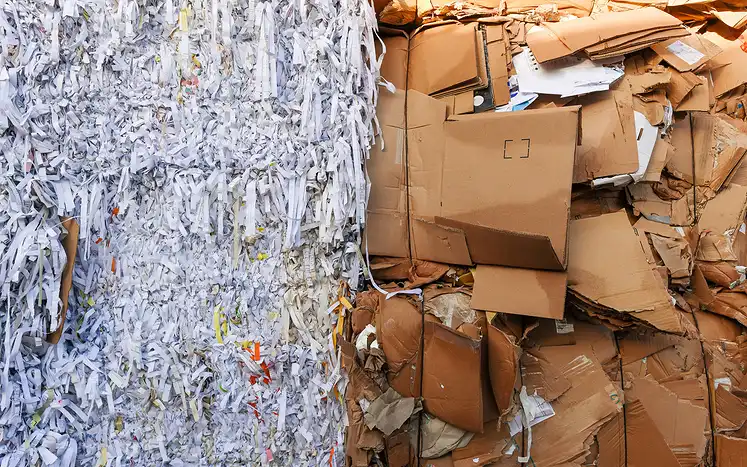


Your collection service will dictate what can go in each container. For this reason, we provide each business with clear, service-specific guidance, so your staff know exactly what goes where.

Under Simpler Recycling, dry mixed recycling can be a single collection covering plastic, metal and glass, so your team doesn't need a separate bin for each one. Paper and card should be collected separately by default, because keeping them clean and dry helps them stay recyclable. There is one exception, however, as a waste collector may co-collect paper and card with other dry recyclables where separate collection isn't technically or economically practicable, or where it provides no significant environmental benefit. Any such decision must be supported by a written assessment.
In some cases, a dedicated glass collection is the better fit, particularly where you produce a lot of bottles. Of course, dry materials are only part of the picture, and food waste is the stream that surprises many businesses most.
Mandatory food waste collection means you must keep food waste separate from dry recycling and general waste. This applies even where your workplace produces only a small amount, so a staff kitchen and a busy café are covered in the same way. The right solution depends on your operation, so you may not need a full-sized bin if you don't produce a lot of food waste.

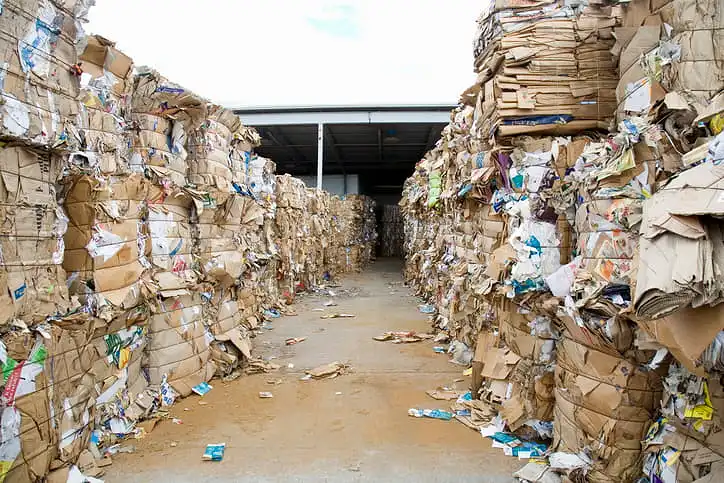
Residual waste is whatever remains after you've separated your recyclables and food waste. Because Simpler Recycling takes the other streams out, you'll often find that your general waste bin can be smaller or collected less often. That's why separating properly tends to be better for your running costs as well as for the environment.
Many businesses also ask whether they can achieve zero waste to landfill. Careful separation is the first step towards that goal, and what happens to your materials after collection also plays a part. But with the right setup and level of commitment, this is very much an attainable goal.
Simpler Recycling sits alongside your existing legal responsibilities, and duty of care compliance is one of the most important. It means making sure your waste is handled legally from the moment it leaves your premises, and all it takes is forming a few simple habits:
We are a fully licensed and compliant waste carrier, so the first two are covered from day one. At Hurn Recycling, we run our own vehicles and local teams, supported by the commercial waste infrastructure needed to keep your collections reliable. With those foundations in place, you can focus on the day-to-day question of whether your current service is up to scratch.
We can review your existing service and identify any gaps, so you're confident you're meeting Simpler Recycling requirements. From there, we'll recommend the best solution, including container sizes and collection frequencies that suit the waste your workplace produces.
The service provided by us is reliable, flexible, covers fully compliant collections, and is backed by expert support. Site surveys and risk assessments are included, our pricing is transparent with no hidden costs, and you'll have one point of contact for all your waste and recycling.
Our company has been family-run and independent since 1998, and we serve both Devon and Dorset, so you'll be speaking to people who know your area. If you'd like to discuss the new regulations further or request our help, call us on 01202 257530 or use the contact form on our website.

Not necessarily. If your current collector already offers separate collections for dry recycling, food waste and general waste, and can tell you what goes in each container, you may only need small changes. If you're unsure, ask them to confirm in writing what your service covers. We're also happy to review your existing arrangements and point out any gaps.
Plus, we provide all these collection services, so can handle all your Simpler Recycling requirements.
It depends on what you produce and how your service is set up today. Separating recyclables and food waste often means your general waste bin can be smaller or collected less often, which can offset the cost of the extra collections. Our pricing is transparent with no hidden costs, so once we know what your workplace produces, we can give you a clear quote. If you are non-compliant, your business is at risk of being fined by your local authority.
You don't need to scrub everything, but items should be reasonably clean. Glass food jars should be rinsed and empty, and foil should be clean, while paper and card should be kept dry, so they stay recyclable. A quick rinse is usually enough, and our service-specific guidance shows your team exactly what's expected.
This often comes down to who arranges the waste collection, which could be you, your landlord or a managing agent. Start by asking who holds the contract and what it covers. If it's shared, it's worth agreeing how food waste and dry recycling will be separated. If you'd like a second opinion, we can survey the site and suggest a practical set-up.
The core materials covered are paper and card, plastic, metal, glass, food waste and residual waste. Confidential waste, electrical items (WEEE) and hazardous waste are handled separately, because they need specialist collection and disposal. We offer all three, so you can arrange them alongside your everyday recycling through one point of contact.
Clear information makes the biggest difference. Put simple guidance next to your bins so staff can see what goes where and keep the number of containers in each area manageable. We give every customer service-specific guidance for their collection, which you can share with your team. If someone's unsure whether something can go in, they can always call us on 01202 257530.
2026 © Hurn Recycling All rights reserved.