At Hurn Recycling, we provide comprehensive food waste recycling services covering the entirety of Dorset.
Food waste recycling is the process of collecting unwanted food and turning it into useful products instead of sending it to landfill. Food scraps are usually processed through:
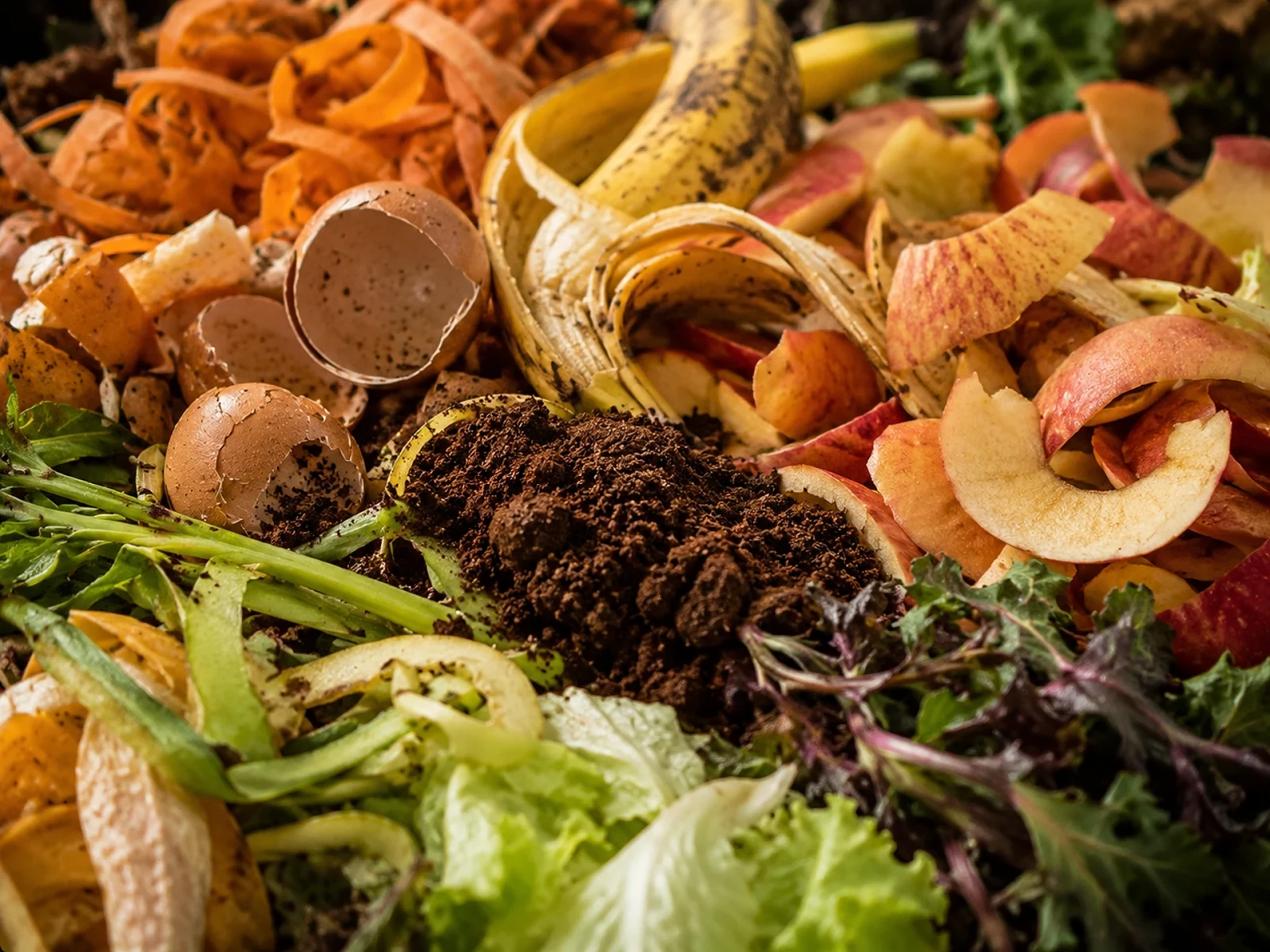
Common recyclable food waste includes fruit and vegetable peelings, leftovers, meat, fish, dairy products, bread, rice, pasta, and coffee grounds.

Food recycling has several environmental and economic benefits:
Food waste collections that meet current organic waste regulations, with full traceability for your records.
We collect food waste from your business using dedicated, clearly labelled containers and transport it safely to a specialist recycling facility.
On arrival, the waste is weighed, inspected and checked for contamination before being prepared for the appropriate treatment process.

Anaerobic Digestion: Food waste is broken down by microorganisms to produce renewable biogas and nutrient-rich digestate, which can be used as fertiliser.
In-Vessel Composting: Food waste is combined with garden waste in a controlled environment to create compost for agriculture, landscaping and horticulture.

The materials created during recycling are then put to practical use. This helps recover value from food waste whilst reducing reliance on landfill and supporting a more circular economy.
Biogas can be converted into renewable electricity, heat or vehicle fuel, while nutrient-rich digestate and compost are used to improve soil quality and support agriculture, landscaping and horticulture.


Most food waste can go straight into your food waste bin, including:
The following materials must not be placed in the recycling container, as they can contaminate your food waste bin:
For a detailed list, please refer to our guidelines or contact our team. You can contact us using our contact form or give us a call on:
Bournemouth – 01202 257530 or Exeter – 01392 323316
The United Nations estimates that a third of all food produced globally is lost or wasted each year, totalling 1.3 billion tons. That's enough to feed the world's hungry many times over. And it's not just a developing world problem. In the UK 4.5 million tonnes of food are thrown away by households annually.
The good news is that there are many ways to reduce food waste, and recycling is one of them.


The UK has been working to tackle food waste for several years, with a voluntary, government-backed target (the Courtauld Commitment) aiming for a 20% reduction in food waste by 2025. While per capita food waste fell significantly between 2007 and 2018, progress has since stalled, and that 2025 target wasn't met.
The longer-term goal, aligned with the UN's Sustainable Development Goals, is now a 50% reduction by 2030. Under the Environment Act 2021, mandatory food waste collection has since been phased in across England: businesses and other non-household premises have been required to separate food waste since March 2025, and household food waste collections became mandatory from March 2026.
This brings England into line with Scotland and Northern Ireland, which already require businesses producing more than 5kg of food waste a week to collect it separately, and with Wales, which introduced similar rules in 2024.
Local authorities can issue fines to businesses that don't comply with these new separation requirements, so it's worth making sure your food waste collection is properly set up.
2026 © Hurn Recycling All rights reserved.